

Jun,1 2024
Linen wipe
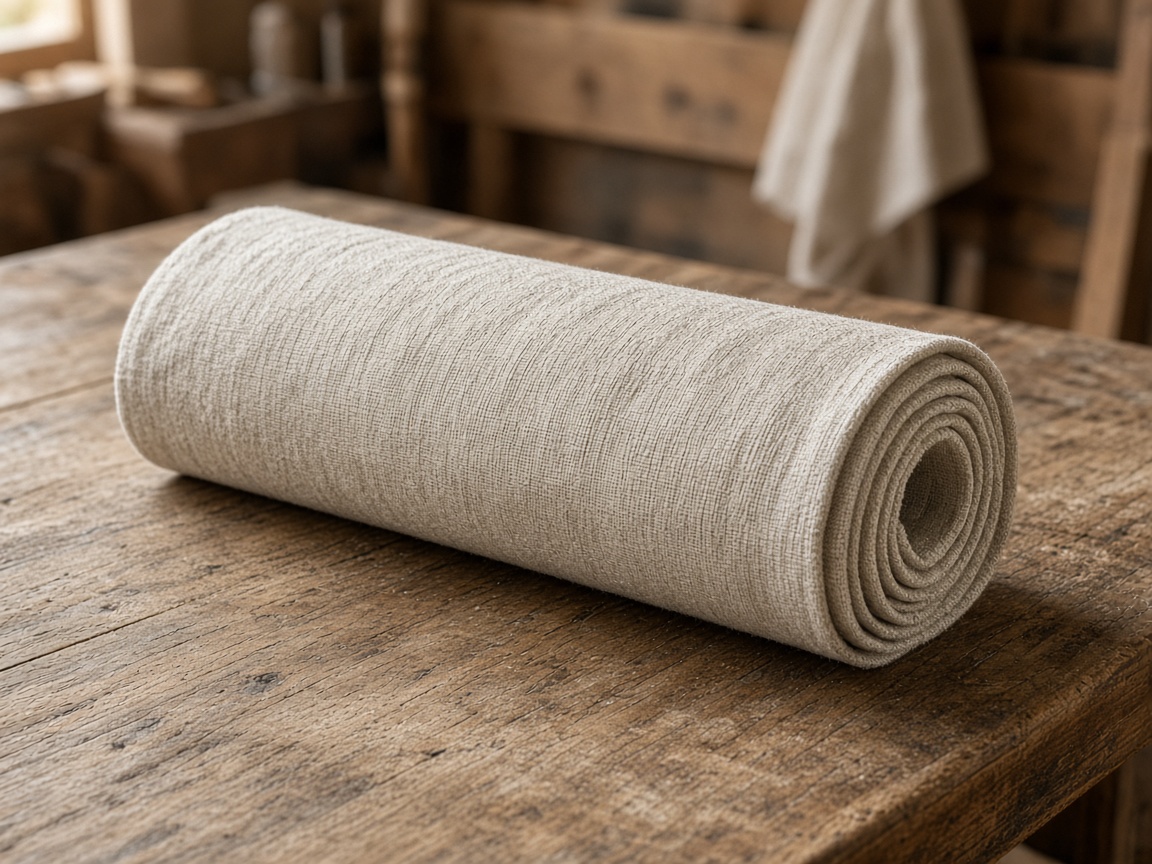
A linen wipe is the cloth between the finish and the wood.
Paper tears, leaves lint in a wet coat, and cannot take a second pass of oil without falling apart. Linen holds together when it is damp with oil, and it does not shed into the grain. That is why the roll is in the workshop edit and not with the home throws.
Cut from the roll. Do not tear. A torn edge frays into the finish. A hem is unnecessary. A clean cut is enough.
Cut a square, use it, and keep the oily ones in their own tin.
A wipe that has had oil on it does not go back in the dry drawer, and it does not go in a pocket. Oily cloth is a fire risk in a heap. A metal tin with a lid, not a full one, is the place until wash day.
“
Linen takes oil better than paper and washes clean.
Wash the cloth before you decide it is finished.
Warm water and a plain soap lift most of a wax or an oil. Paper cannot be washed, so you throw the money away with the finish. Linen survives that wash for a long time if you do not use it as sandpaper.
Keep two piles. Dry linen for dust before a finish. Oily linen for wiping a coat on, then off. Mixing them is how dust gets into the oil and the surface goes grey.
Do not use the wipe as a rag for solvent unless you mean to retire it. Solvent lives in the cloth after the smell has gone, and the next wash is not the place for that.
A roll on a nail by the bench is the whole storage system. If you have to look for a cloth, you will use your sleeve.
Square, tin, wash. Paper is for paint you will not touch again. Linen is for oil and wax you will.
The shop does not charge a card. If you want the roll and a tin noted together, say so in the inquiry.