

Jun,1 2024
On the desk
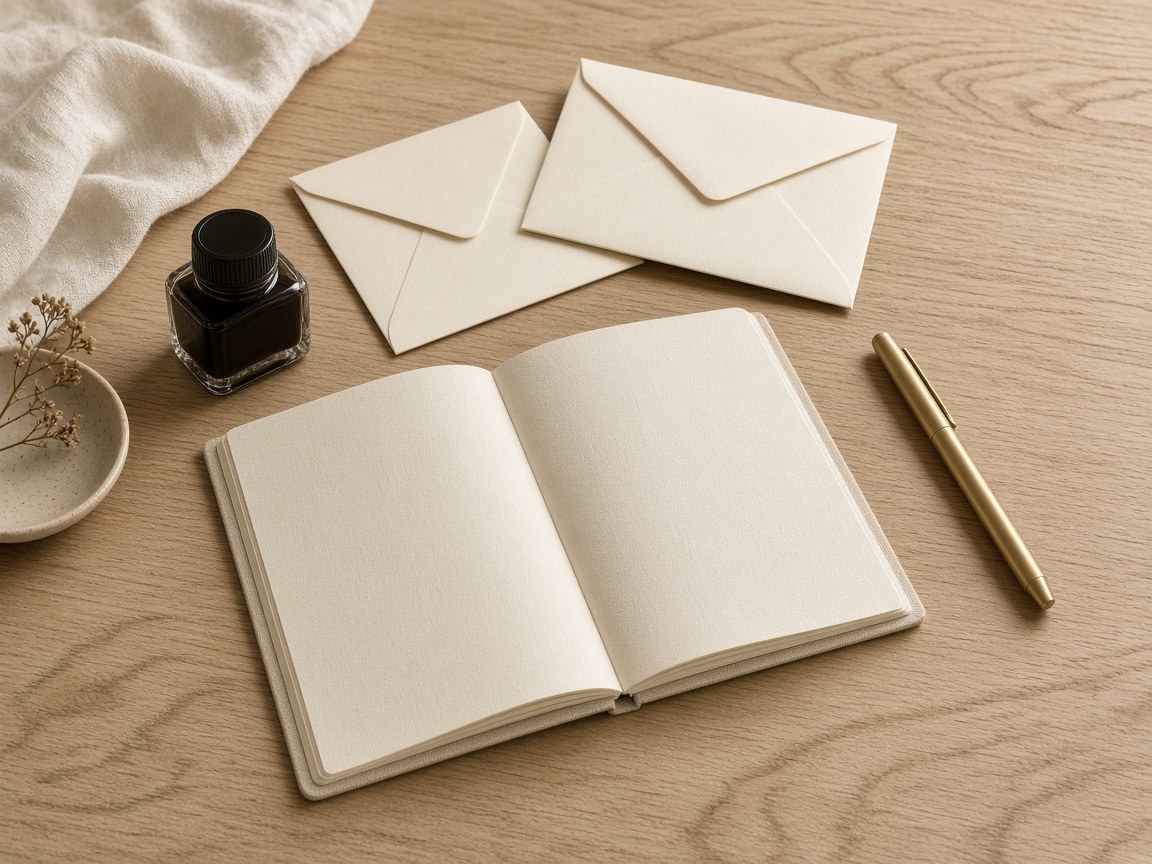
The desk is a small landscape, and most of it should be boring.
We keep the stationery edit to a notebook, an ink, envelopes, and a seal because those four cover a letter and a day of notes. Anything else on the desk is your work, not the shop's. A pen cup with twelve pens is how you spend the first minute choosing. One pen that is filled is the better object.
At the end of the day, close the book, cap the ink, and leave the rectangle clear. Tomorrow starts faster.
The things you use daily get the near edge. The rest gets a drawer.
A desk covered in objects you might need is a desk you cannot write on. Notebook open, ink capped beside it, envelopes in a shallow tray. The seal and the spare paper can live one reach further back.
“
Keep the notebook, the ink, and the envelopes within reach. The rest of the desk can stay clear.
Clear the page before you start, not after you have written around the clutter.
Moving a cup, a cable, and a stack every time you sit down is how the writing stays a plan. The clear rectangle only has to be the size of the open book and your forearm. Protect that, and ignore the rest of the room.
Light comes from the side that does not throw your hand onto the line. The same rule as a bench. Right-handed, lamp on the left. The page should be brighter than the rest of the desk, and not so bright that the paper glares.
Envelopes stay flat. A curled envelope announces that it lived under a book. The tray in the edit is shallow for that reason.
A wax seal is for the letter that needs it, not for every note. Heat, a steady hand, and a surface that can take a warm stamp. Do not seal over a laptop.
Near edge for the daily three, a clear rectangle the size of the book, light from the side. Then write.
The desk does not have to be empty. It has to be usable in the minute you sit down. An inquiry can include a tray and a notebook together. The shop does not charge a card.