

Jun,1 2024
Ink notes
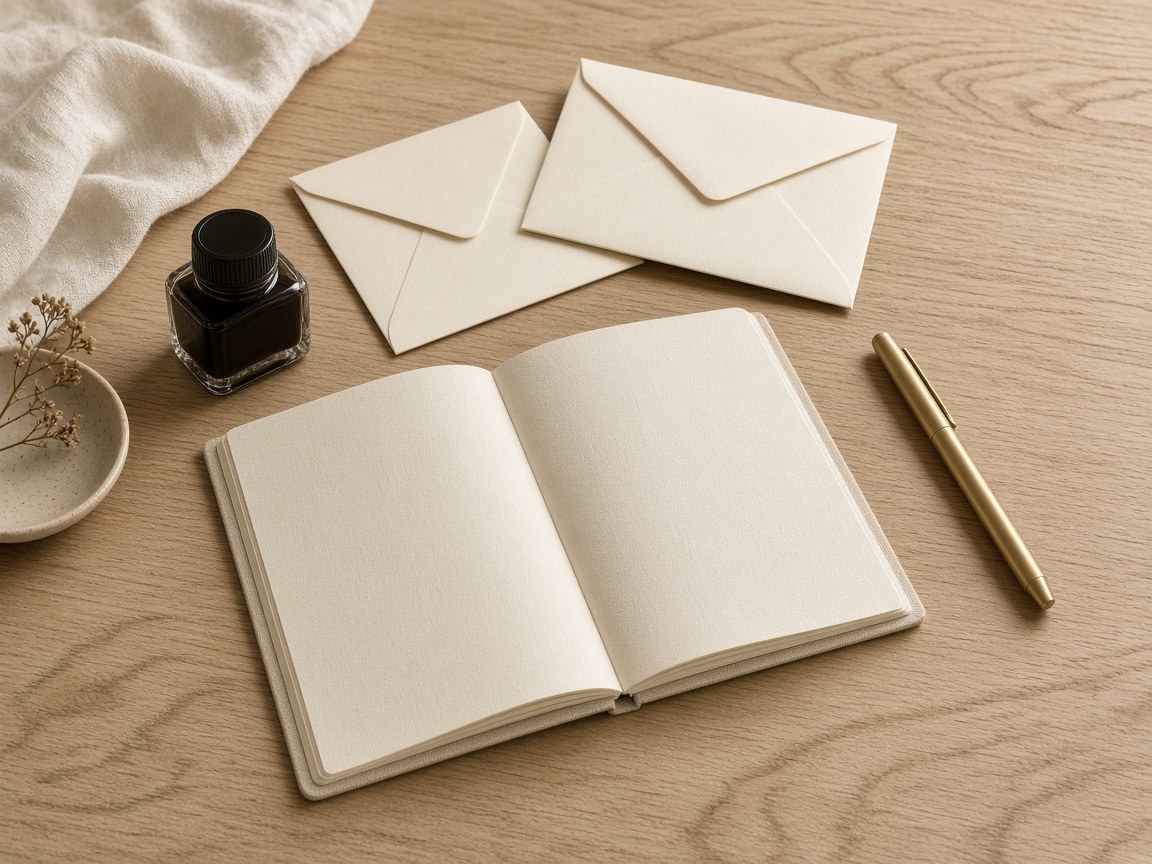
Ink notes are about the line you will want to read later.
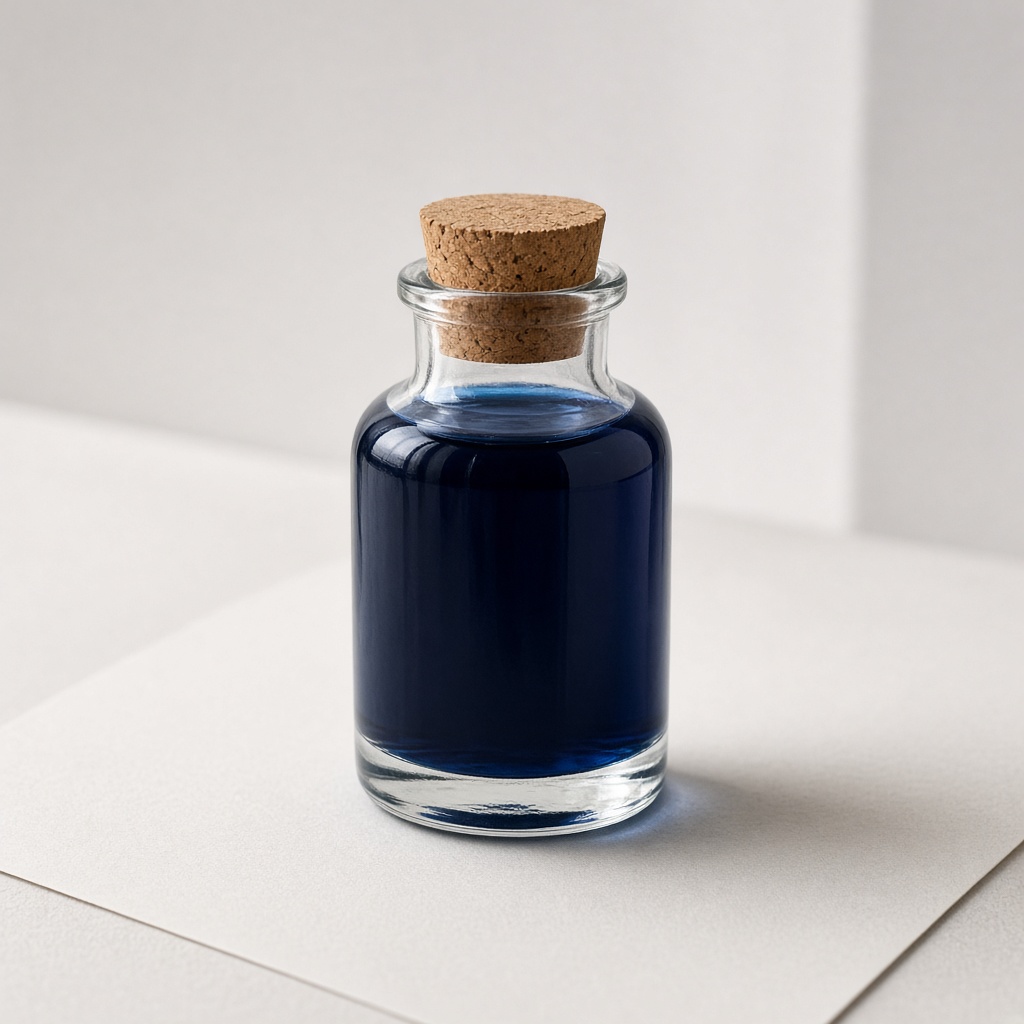
We keep a dark ink in the edit because pale inks look delicate and fail the first time the page is read in a hurry. The bottle is glass so you can see the level and the colour without opening it. Fill the pen over a cloth. The linen wipe from a workshop would do. A paper towel leaves lint in the nib.
Store the bottle upright, away from the window. Sun changes a dye, and a bottle on its side is a desk you will not enjoy cleaning.
Cap the bottle. Dust in the neck is how a good ink turns grit.
Wipe the lip after you fill the pen. A wet neck dries into a crust, and the next dip carries that crust onto the page. The cap goes on before you start the sentence, not after the page.
“
Dark ink sits in the page. Let it dry before you close the book.
One dark ink is enough for the work. A second colour is for the margin.
A drawer of near-blacks is a way to postpone writing. Keep the daily ink dark enough to read in ten years, and permanent enough that a drop of tea does not lift the sentence. Use a washable ink only when you know you will want to lift it.
Dry time is part of the ink. A wet, beautiful line that smears when you turn the page is the wrong ink for a notebook you write in quickly. Blot if you are in a hurry. Do not close the book on a wet line and hope.
Shake nothing. Sediment in some inks is normal. Rolling the bottle gently is enough. A hard shake fills the pen with bubbles and the line skips.
If the ink is for a letter you will post, give it an hour. A warm envelope seals a damp address into a blur.
Dark, capped, dry before the book closes. The colour can be quiet. The line should still be there next year.
A stained hand washes off. A stained page does not. Keep a scrap beside the bottle for the first stroke after filling, so the blob stays off the letter.