

Jun,1 2024
Room notes
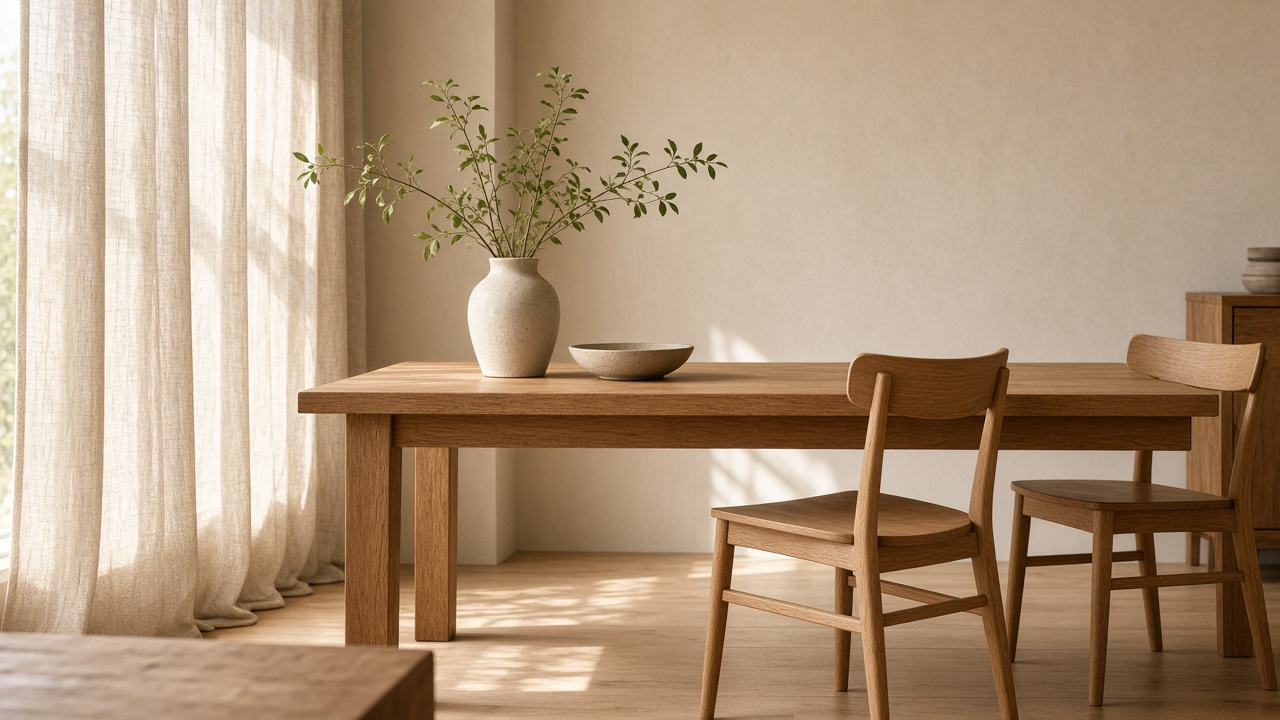
Room notes are about the floor you walk, not about filling a wall.
Start with the path. Where do you enter, where do you sit, where is the light. A table that blocks the path will be hated in a week, even if the top is the right oak. We would rather a smaller top and a clear walk than a generous piece you have to squeeze past.
Height is the next note. A desk that is too tall lifts the shoulders. A sofa that is too deep swallows a person who wants to read. The edit is scaled for rooms people sit in, not for a showroom with a higher ceiling than yours.
A chair that cannot be walked past is the wrong size, however good the seat.
Leave a clear line from the door to the window and from the table to the seat you actually use. The piece has to live in that line, not only in the corner of a plan.
“
Measure the path through the room before you measure the piece.
One large piece, then stop.
A room reads as finished when the largest object is right and the rest is quiet. A second sofa, a second table, and a second lamp usually means the first choice was unsure.
Light changes the finish. A pale oak under a north window is a different colour at four in the afternoon. If you can, look at a sample in the room before you commit. An inquiry can ask for that. The shop does not charge a card.
Rugs should stop short of the piece or go well under it. A rug that ends in the middle of a chair leg makes the room look accidental.
Leave one wall without furniture. The eye needs a rest the way a table top needs a quiet grain.
Write down the path, the seat height you already like, and the light. Those three lines choose the piece better than a mood board.
The room is finished when you can walk through it without thinking.