

Jun,1 2024
Fabric notes
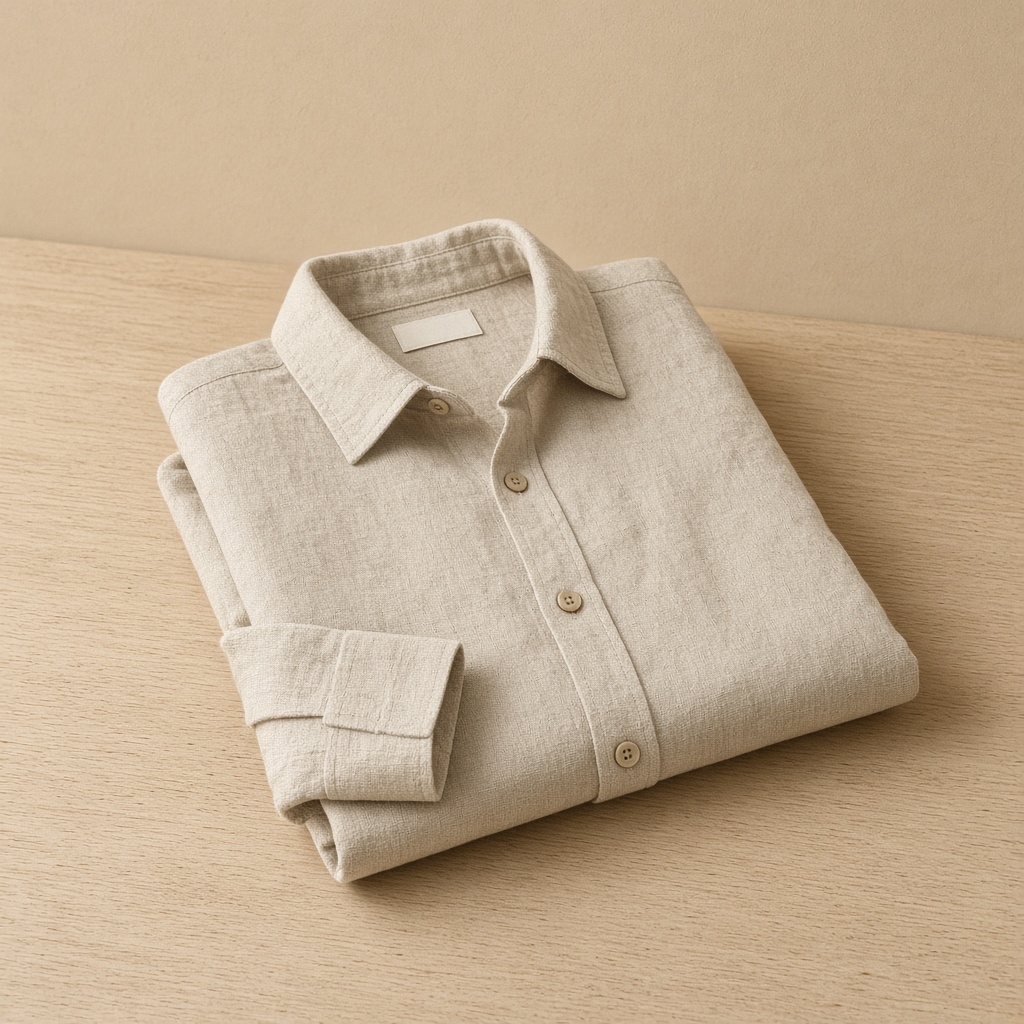
Fabric notes start on the table, with the cloth in the hand, before a pattern is cut.
We look for a weight you can wear for a full day without it clinging or standing away from the body. Linen that is too fine wrinkles into strings. Wool that is too thick belongs in a coat, not a shirt. The middle weights are the ones that earn a place in the edit.
Colour is checked in daylight and again under a lamp. A blue that looks clean at noon can turn grey at a desk. If it fails the lamp, it does not go on the rail.
A cloth that hangs well on the table can still be wrong for the day.
Hold it to the light, then crush it in your hand. Light cloth shows every crease and feels right in heat. A denser weave keeps a shape and asks for a cooler room.
“
Choose the weight of the cloth before you choose the colour.
Wash the sample before you commit to a length.
A cloth that only looks right before the first laundry will not survive a season. Seams should sit flat after that wash. If the stitch puckers, the weave is fighting the make.
The floor of the studio is where the cloth is judged. A hanging swatch lies about drape. A garment on a person, walking the length of the room, shows whether the weight belongs in a shirt or a coat.
We write fibre, wash, and season on the same card as the cloth. The care line on the finished piece is that card, shortened.
Press lightly. Heavy heat flattens the texture the cloth was chosen for.
If a cloth pills or twists after a few wears, that is a note for the next cut, and we want to hear it.
Weight first, colour second, a wash before the rail. That is the fabric note.